Overpackaging is any packaging that goes beyond what’s needed to protect, transport or inform. It creates more packaging waste, more plastic and higher costs. Three reflexes when you shop: buy in bulk or in large formats, group your orders, and choose packaging that’s easy to recycle.
Packaged or overpackaged? In the grocery store aisle, excessive packaging doesn’t always jump out at you. As an informed consumer, you can leave unnecessary packaging on the shelf. This guide helps you understand overpackaging, spot it, avoid it and sort it properly.
What is overpackaging?
Overpackaging is packaging that no longer serves a real purpose. Necessary packaging protects the product, preserves the food or informs the buyer. Anything added beyond that is excess packaging: an extra layer of plastic film, an oversized box, a decorative container.
Packaging comes in 3 levels. Primary packaging touches the product. Secondary packaging groups several units together. Tertiary packaging protects everything during transport, from the factory to the store. Overpackaging appears when one of these levels no longer plays any role.
Why is overpackaging a problem?
Overpackaging multiplies environmental impacts without doing anything useful. Every unnecessary layer takes more packaging material, more storage space and more trucks on the road. It then adds to your household waste, and its cost ends up in the price you pay.
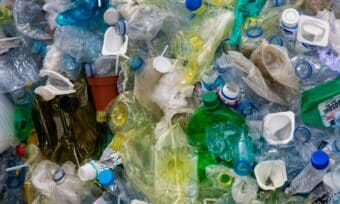
- More materials, including plastic and single-use packaging
- Heavier logistics, which increase transportation emissions
- A cost passed on to your grocery bill
Fictional example: a box of cookies holds 12 individually wrapped packets sitting in a plastic tray. Three layers for a single product! In our view, this is the easiest environmental impact to reduce, since it depends on what goes in your cart.
How can you spot overpackaging at the grocery store and online?
Overpackaging is easy to spot with one simple sign: the packaging looks bigger or more complex than the product requires. At the grocery store, watch for single-serve portions and trays wrapped in plastic film. When you shop online, be wary of half-empty boxes.
| Common example | Why it’s wasteful | Alternative |
|---|---|---|
| Vegetables in a plastic tray | The peel already protects the food | Bulk |
| Individually wrapped portions | One layer per portion | Large format |
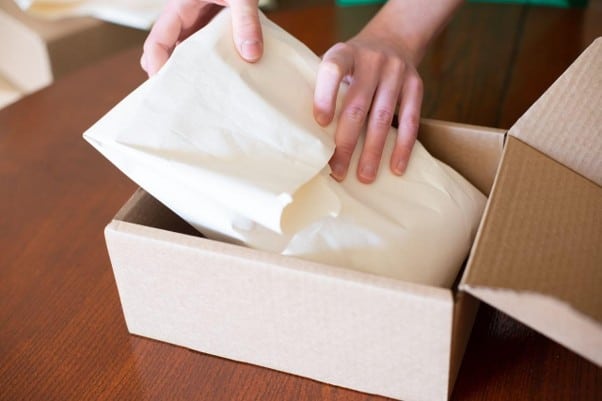
| Half-empty delivery box | Cardboard and filler for empty space | Grouped orders |
But food packaging isn’t always excessive: vacuum-sealed meat stays fresh longer, which limits food waste.
Reduce packaging waste: 5 habits when you shop
To reduce packaging, it all comes down to the moment you buy. Here are 5 habits to adopt starting with your next grocery run.
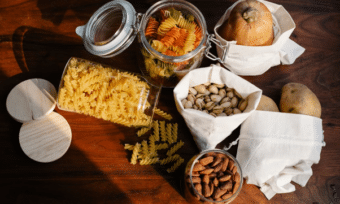
- Choose bulk and bring your own containers
- Pick large formats over single-serve portions
- Group your online orders to limit deliveries
- Opt for cardboard or recycled packaging
- Ask yourself three questions: Do I really need it? Can I find it second-hand? Is it packaged or overpackaged?
We recommend starting with large formats: it’s the simplest habit, with no need to change brands or budgets. The zero-waste approach goes further, but it isn’t mandatory. And to see how these choices fit into our own approach, discover our commitments for the planet.
Sorting and recycling packaging properly in Quebec
Unavoidable packaging should at least end up in the right bin. With Quebec’s modernized curbside recycling system, producers are now responsible for the packaging they put on the market, which pushes them to simplify it.
Sorting still has room for improvement: more than 57 000 tonnes of non-compliant materials were rejected by sorting centres in 2025 (Source: Éco Entreprises Québec, 2025 report). Due to the risk of contamination, these errors send recyclable materials to disposal. The reflex? Check your municipality’s sorting guidelines and learn how to recognize recyclable packaging. Sorting properly at end of life completes the effort to reduce waste at the source.
How are companies rethinking packaging?
Companies are rethinking packaging by removing unnecessary layers, right-sizing boxes and turning to sustainable packaging made from recycled or recyclable materials. The challenge is twofold: shrinking their footprint and meeting consumer expectations.
At Cascades Fluff & Tuff, our paper products are made in Quebec, at our mills in Kingsey Falls and Candiac, and come in recycled packaging. A sustainable choice that ensures a reduced impact on resources.
Overpackaging: key takeaways
- Overpackaging: packaging with no protection, preservation or information function
- It increases waste, logistics and costs for consumers
- Typical cases: single-serve portions, plastic trays, half-empty boxes
- Bulk, large formats and grouped orders help you avoid the unnecessary
- Sorting matters: more than 57,000 tonnes of non-compliant materials in the bin in 2025 (Éco Entreprises Québec)
The trend is toward less packaging. Read our sustainable consumption tips, for you and for the environment!