Key takeaways
- Zero waste means reducing waste at the source instead of disposing of it more neatly.
- Refusing and reusing come before recycling in the hierarchy of the 5Rs.
- Québec disposed of 685 kg of residual materials per resident in 2023, according to the Gouvernement du Québec.
- Replacing disposables with reusables brings household waste down fastest.
Reducing waste at home takes no budget and no special equipment: it all comes down to ordinary habits repeated week after week. Here is where to start, one room at a time.
What does a zero waste approach really mean?
Zero waste is a consumption approach aimed at eliminating waste at the point of purchase rather than managing waste better once it exists. It puts waste prevention first and plays out in concrete habits, from the choice of containers through to compost.
The 5Rs, the foundation of zero waste practices
The zero waste lifestyle rests on 5 zero waste principles that follow a set order:
- Refuse;
- Reduce;
- Reuse;
- Recycle;
- Compost.
Recycling comes second to last among the 5Rs, because waste avoided always beats waste sorted correctly. Some people speak of zero waste and zero food waste together as a reminder that discarded food weighs as much as its packaging.
The zero waste approach changes the way you shop. Before buying, you look at products and packaging and ask whether the item is truly necessary and whether it exists in a durable version. Sorting becomes a safety net, not the first reflex.
Why are Québec households getting on board?
Québec households are getting on board because our consumption’s impact on the environment plays out largely at home: packaging, food scraps, and disposable items pile up room by room. That is also where small habits show results fastest.
Organizations such as the Association québécoise Zéro Déchet support the transition to waste-free living across Québec by betting on education rather than guilt.
A society-wide goal of zero waste is still distant, but every household that starts brings it closer. That leaves the question everyone asks in front of the shelf: is consuming responsibly every day really possible?
Replacing single-use products with reusables
Reducing waste in the kitchen: containers, plastic wrap, and straws
The kitchen produces a good share of the household’s plastic waste. A few durable swaps are enough to remove most of it:
- Glass or steel containers to store leftovers replace plastic wrap.
- Stainless steel or silicone straws replace the disposable ones that end up in the garbage.
- A spare utensil kept in your bag avoids the single-use plastic or wooden cutlery at lunch.
Less packaging waste in the bathroom and with household cleaners
The bathroom produces mostly plastic and cardboard packaging. Bar soap, a toothbrush with a recyclable and recycled handle, and washable face cloths: almost all the packaging disappears from the recycling bin.
On the cleaning side, a homemade all-purpose cleaner replaces several bottles, and a washable cloth takes over for most spills. Toilet paper and recycled paper towels keep their place for the rest. Choose them in recycled fibres, in packaging made of 100% recycled plastic.
For lunches and grocery bags: the disposables that fill the garbage
Lunch is where disposables pile up without anyone noticing. A reusable box, a snack container, and a water bottle handle most of the week, for the little ones as much as the grown-ups.
At the grocery store, plastic bags give way to reusable bags kept in the car, right down to the small bags for fruits and vegetables. A clean container brought to the counter handles the rest for yogurt or deli meats.
Recycling and composting, the last link in waste reduction
Once refusing and reusing are behind you, there are still materials to move out of the house. Sorting and composting close the loop: they decide whether those materials go back into a recovery stream or are sent to landfills.
Sorting what can actually be recycled
Since January 1, 2025, the sorting rule has been simplified in Québec: every container, packaging, or printed paper goes in the recycling bin. A jar emptied of its leftovers doesn’t need washing: a quick rinse is enough. Plastic bags and wrapping films go in too, where facilities accept them.
Bac Impact, the recycling authority in Québec, publishes the list of materials accepted for curbside recycling, and that list keeps changing as the Ministère de l’Environnement du Québec broadens the materials its modernized collection targets.
Composting organic waste
Organic matter makes up the heaviest portion of the garbage bag. Composting food scraps, in a municipal bin or a backyard composter, keeps this waste out of landfills, where it would release greenhouse gas emissions in the form of methane as it breaks down without oxygen.
Keeping organic matter out of landfills is how compost contributes to the fight against climate change, on top of feeding the garden.
Used paper towels can go in too. Cascades Tuff® Enviro paper towels are CMA-W certified by the Compost Manufacturing Alliance: they compost in municipal or industrial facilities, but not in a backyard composter.
According to the 15th report on residual materials management published by the Gouvernement du Québec, the quantity disposed of fell from 719 kg per resident in 2021 to 685 kg in 2023. The report links that 5% drop to the population’s sorting habits.
Some materials still end up in the compost by mistake:
- Stickers on fruit, which persist in finished compost.
- Dishes and utensils labelled compostable, refused by several municipalities for the chemical residues they leave behind.
- Waxed paper and cardboard, whose film does not break down.
Sustainable consumption and the circular economy
Buying in bulk and avoiding food waste
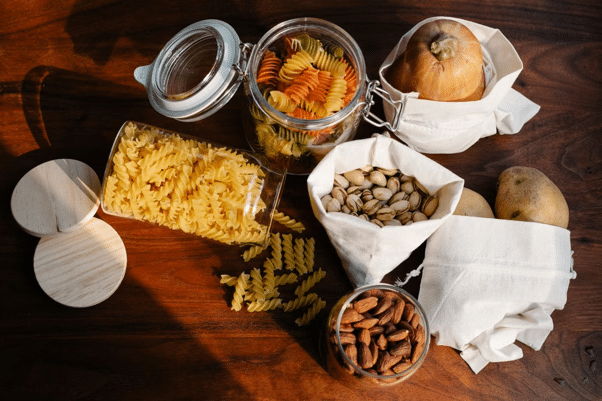
Buying in bulk removes packaging at the source and lets you adjust quantities, which reduces food waste at the same time. Buying 200 g of nuts rather than a whole bag means that much less heading for the garbage.
Planning meals before heading out to shop remains the simplest tool for moving toward sustainable consumption. A precise list leaves little room for purchases that end up forgotten at the back of the fridge.
Giving objects a second life through reuse rather than throwing them away
Reuse and repair extend an item’s life cycle: refurbishing it, lending it, reselling it, or giving it away all delay its end of life. That is the principle of a circular economy: what leaves one household becomes another’s resource, and reuse replaces buying new.
Reuse also applies to raw material. Using 100% recycled bathroom tissue, made from recycled fibres rather than virgin fibres, conserves natural resources and reduces your environmental footprint without changing your habits.
Frequently asked questions about zero waste
Where do you begin when you’re starting from scratch?
Pick 1 habit and hold it for 1 month before adding another, for example, refusing the promotional items handed to you without asking. The approaches that last are the ones that move slowly, without upending the whole household at once.
Does zero waste cost more?
The upfront investment is real: a water bottle, containers, and cloth bags. They pay for themselves afterward, since these reusable containers replace repeated purchases. Bulk and lower food losses also generate savings visible over a full year, especially in a large family.
What do you do with materials that can’t be recycled?
Some materials have no municipal collection stream: styrofoam, batteries, and small electrical appliances. Start by checking the ecocentres and the specialized drop-off points in your own region. When no option exists at all, the real answer is to prevent waste upstream, at the moment of purchase.
How do you get children involved?
Give children a concrete, visible responsibility: sorting the bin, weighing bulk fruit, packing their own lunch box. Trusting them with it early works better than a repeated reminder, and a habit they carry out with their own hands is rarely forgotten.